Iran, Pakistan emphasize developing cooperation centered on Chabahar-Gwadar
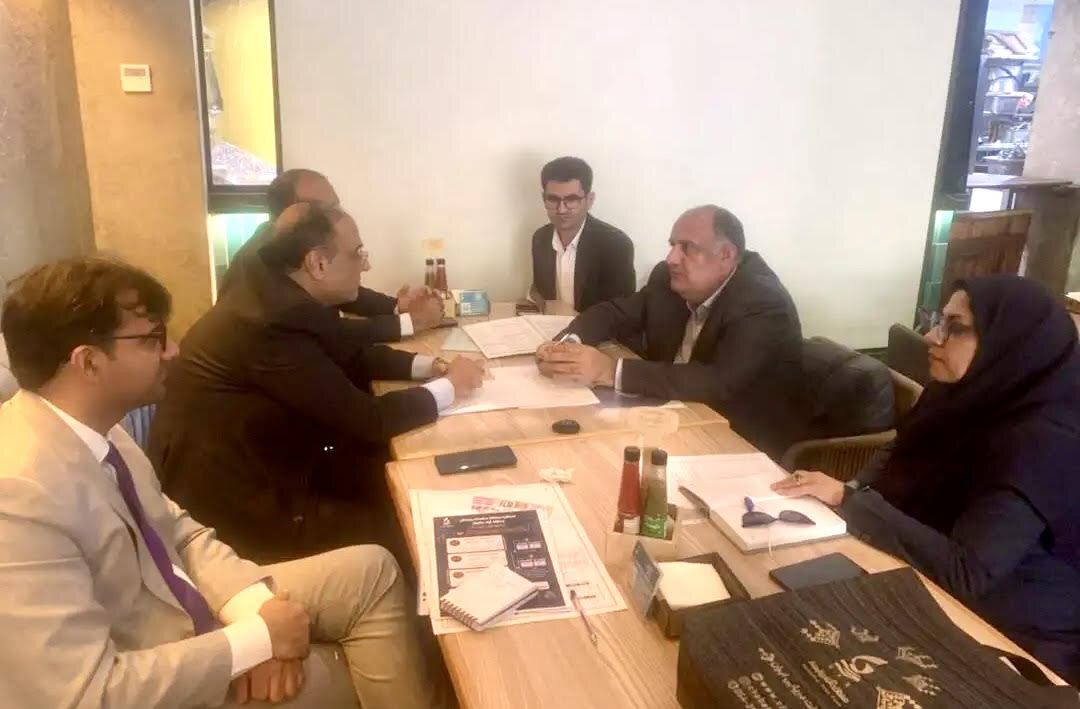
TEHRAN- The CEO of the Chabahar Free Zone Organization met with the new Pakistani ambassador and emphasized the development of Iran-Pakistan cooperation centered on Chabahar-Gwadar and the creation of the Rimdan-Gabd joint free zone.
Mohammad Saeid Arbabi, in a meeting with Imran Ahmed Siddiqui, the new ambassador of the Islamic Republic of Pakistan to the Islamic Republic of Iran, in Tehran, reviewed and exchanged views on solutions for developing economic, commercial, transit, and investment cooperation between the two countries, with a focus on the strategic capacities of Chabahar-Gwadar and the border regions of Rimdan-Gabd.
In this meeting, the two sides, referring to the historical, cultural, and economic ties between Iran and Pakistan, emphasized the necessity of maximizing the use of the capacities of free zones, ports, and border crossings to strengthen bilateral relations, develop trade, and increase regional interactions.
Mohammad Saeid Arbabi stated that the Chabahar Free Zone, as the only oceanic free zone of Iran, holds a strategic position in international transport, trade, and transit corridors, and described the development of joint cooperation between the Chabahar and Gwadar free zones as a foundation for increasing economic exchanges, attracting joint investments, developing logistics chains, and strengthening the region's role in international trade.
He stated: Chabahar and Gwadar, as two strategic sister and complementary ports and free zones, with extensive capacities in transport, transit, and trade, can, through synergy of their capabilities, help strengthen the economic ties between Iran and Pakistan and increase the economic connectivity of the countries in the region.
The CEO of the Chabahar Free Zone Organization also emphasized the necessity of accelerating the creation of infrastructure facilitating border trade and said: Establishing a new independent joint border gate between Iran and Pakistan within the area of the detached Rimdan region of the Chabahar Free Zone is one of the important and necessary measures to facilitate and streamline the movement of trucks carrying import, export, and transit goods between Rimdan and Gabd.
He added: The operation of this border gate, while reducing travel time and increasing cargo handling capacity, can play an effective role in developing commercial exchanges and realizing the 10-billion-dollar trade program, enhancing the status of the Rimdan-Gabd axis, and turning this region into one of the important hubs of border trade between the two countries.
Arbabi also considered the establishment of the Rimdan-Gabd joint free zone as another important axis of future cooperation between Iran and Pakistan and noted: The realization of this agreed-upon project between Iran and Pakistan can pave the way for facilitating border trade, attracting investment, boosting production, creating job opportunities, and balanced development of the border regions of the two countries.
Imran Ahmed Siddiqui, the ambassador of Pakistan to Iran, also welcomed the development of economic and commercial cooperation between the two countries and emphasized Pakistan's readiness to expand joint interactions through the capacities of the ports and free zones of Chabahar and Gwadar, as well as the border region of Rimdan and Gabd.
He considered the development of border cooperation and increasing economic ties between the neighboring regions of the two countries as an effective step in increasing the welfare of the people in the border areas, strengthening friendly relations, and consolidating the historical ties between Iran and Pakistan.
In this meeting, the two sides also emphasized the important role of free zones, ports, and border crossings in realizing the goals of economic diplomacy and the neighborhood policy of Iran, and evaluated the utilization of the capacities of the ports and free zones of Chabahar-Gwadar and the Rimdan-Gabd joint free zone as a strategic factor for the development of trade, transit, and economic connectivity in the region and among the member states of the Economic Cooperation Organization (ECO).
This meeting was held in line with expanding the economic relations between Iran and Pakistan, strengthening regional cooperation, and using shared capacities for sustainable development and increasing bilateral and multilateral economic convergence between Iran and Pakistan and among the countries of the region.
Barter trade with Pakistan can neutralize sanctions
The Governor of Sistan-Baluchestan, describing the results of the Iranian delegation's trip to Pakistan, reported the welcoming of the barter trade proposal by Pakistani officials and the development of economic and infrastructural cooperation.
According to another report released by Fars News Agency from Zahedan, Mansour Bijar, referring to the negotiations held with Pakistani officials, stated: In this trip, various issues were discussed, including removing obstacles to rail transport, developing road and air infrastructure, implementing international conventions, and facilitating border exchanges.
He added: Considering the limitations caused by sanctions, the proposal to use the capacity of barter trade between the two countries was raised; meaning that goods needed by both sides would be exchanged without the need for direct financial transfers and within the framework of customs, standard, and health regulations, and this proposal was welcomed by the Pakistani side.
The Governor of Sistan-Baluchestan emphasized: It was decided that this matter would also be followed up at the level of the province and border states, so that by utilizing shared capacities, the ground for expanding economic, commercial, and transit relations between Iran and Pakistan would be further provided.
Mansour Bijar added: In a meeting with the Prime Minister of Pakistan, it was proposed that just as the 14th government has delegated some authorities to provincial governors, the Pakistani government should also delegate some of its border-related authorities to the Balochistan state so that decision-making and follow-up on border and economic issues can be carried out more quickly.
This proposal was made with the aim of accelerating the implementation of agreements, developing economic cooperation, and paving the way for achieving the goal of increasing trade exchanges between Iran and Pakistan up to 10 billion dollars, and was welcomed by the Pakistani Prime Minister.
The Prime Minister of Pakistan referred this matter to the ministers present in the meeting, especially the Interior Minister, and it was decided that this proposal would also be pursued in a joint meeting with the Chief Minister of Balochistan.
In a two-hour meeting with the Chief Minister of Balochistan, it was also emphasized that a joint mechanism should be formed between officials of both sides to follow up on agreements, and it was decided that representatives introduced by Iran and Pakistan would begin expert negotiations in less than a week.
A significant part of Iran-Pakistan trade is carried out through the capacities of Sistan and Baluchestan, and for this reason, the development of borders, increasing the operating hours of crossings, facilitating truck traffic, and expanding border trade were among the main axes of the negotiations.
He continued: In this trip, with the presence of officials from the Ministries of Interior, Agriculture, Oil, and Transport and Urban Development, efforts were made to ensure that the decisions taken would not remain merely at the level of dialogue, and their implementation process would be followed up from the very beginning in coordination with the responsible bodies.
Iran and Pakistan have set a target of increasing the value of economic exchanges to 10 billion dollars, and achieving this goal requires the development of border infrastructure, transportation, and the facilitation of trade processes; Sistan and Baluchestan will play a decisive role in this path.
The launch of a sea line between the port of Chabahar and Pakistani ports was one of the important agreements of this trip, which can reduce the cost and time of cargo transportation and create a new path for the development of trade between the two countries.
The two sides also agreed to resume flights between Iran and Pakistan, which had been halted due to regional conditions, to re-establish air connectivity between the two countries.
The development of rail transport, the upgrading of the rail line leading to the border on Iranian soil, and increasing cargo movement via rail were other agreed-upon topics during this trip.
MA
Leave a Comment